Mark Twain
Use of Scientific Method Qualifies Literary Realism
A short reflective essay by Lynne Hathaway

What could qualify this humorous tall-tale, A Connecticut Yankee in King Arthur’s Court, so that it could be considered realism?
One precise principle of American Realism demonstrated in A Connecticut Yankee In King Arthur’s Court would be the demonstrations of scientific method that Mark Twain incorporated into the story. More than once, Hank, the main character, saves himself from destruction by relying on scientific method. Thus, a story that is purely imaginative and fairy-tale like, manages to keep its hat in the ring of literary realism.
After Hank had been captured by Sir Kay and brought before King Arthur, Queen Guinevere and Merlin the magician, he was surely fated to be put to death by King Arthur in the very near future. Hank was quick to notice that these medieval people were not scientifically sound and he remarks on it from time to time, as he did after the court was treated to Sir Dinadan’s old jokes, “[The boy] said the most of Sir Dinadan’s jokes were rotten and the rest were petrified. I said ‘petrified’ was good; as I believed myself, that the only right way to classify the majestic ages of some of those jokes was by geologic periods. But that neat idea hit the boy in a blank place, for geology hadn’t been invented yet” (Chpt. 4).
To these simple medieval people, fantastical displays were simply explained as magic, such as the type of the thing in which Merlin specialized in exploiting. To save his own skin, Hank had to think fast. Fortunately, his knowledge of the science of the heavens was going to be his saving grace, for the people he found himself surrounded by where not yet aware of many aspects of this science, or any science, for that matter. Hank noticed this and used it to his advantage. Hank explained, “You see, it was the eclipse. It came into my mind in the nick of time, how Columbus, or Cortez, or one of those people, played an eclipse as a saving trump once on some savages, and it was my chance. I could play it myself now; and it wouldn’t be any plagiarism, either, because I should get it in nearly a thousand years ahead of those parties” (chpt. 5). Hank sent a message that he was going to make the sun disappear which put fear into everyone’s hearts and the fact that the paige had gotten the day wrong turned out to be a fortuitous happy accident and ended up saving Hank.

“…It came into my mind in the nick of time, how Columbus, or Cortez, or one of those people, played an eclipse as a saving trump once on some savages, and it was my chance.”
Hank’s dialogue in Twain’s A Connecticut Yankee in King Arthur’s Court
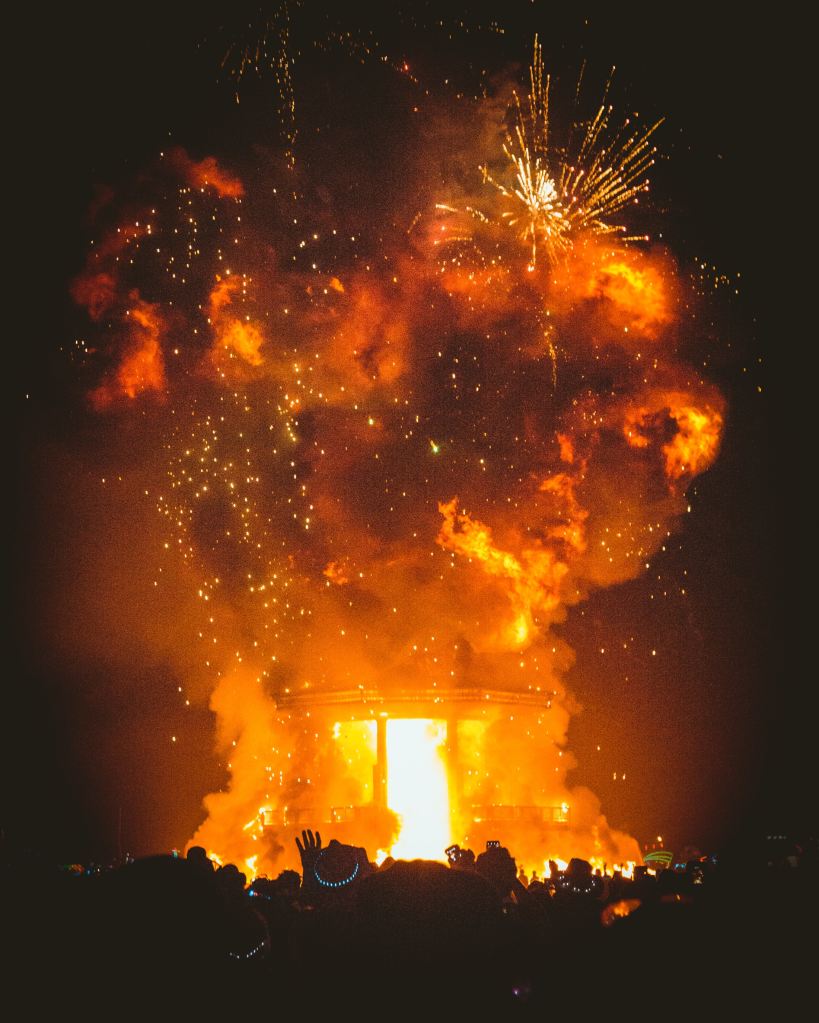
Mark Twain further emphasizes the superiority of the science of the modern age over the less superior medieval age through Hank’s notice of the lack of little conveniences, such as soap, matches, or looking glasses. He noticed, “There wasn’t even a bell or a speaking tube in the castle. I had a great many servants, and those that were on duty lolled in the anteroom; and when I wanted one of them, I have to go and call him.” He also noticed the lack of gas, no candles, sugar, coffee, tea, or tobacco. Hank says, “I saw that I was just another Robinson Crusoe cast away on an uninhabited island, with no society but some more or less tame animals…” (Chpt. 7). The point is clearly made; the scientific advancements of the modern day were but a magical dream to these poor people of the past. They would never know the creature comforts that Hank once enjoyed, but he was quick to use that for his benefit. One such time happened when he decided that it was time to show some more magical power (science) to the people in order to amaze, inspire, and awe them. His chosen target this time was Merlin’s castle. He was going to blow it up. Hank had more than a working knowledge of the secrets of gunpowder and this would be to his advantage. He and his faithful paige quickly made up a few bushels of first-rate blasting power. They also made use of lightning rods and some wires. From there, Hank merely had to wait for a good thunderstorm to roll in, which wasn’t a worry, since they were plentiful. Of course, in due time and despite Merlin’s efforts to thwart the plans, the tower was blown to smithereens and the people were terribly impressed. Another perfect example of the triumph of scientific method and it’s superiority to Merlin’s magic.
…in due time and despite Merlin’s efforts to thwart the plans, the tower was blown to smithereens and the people were terribly impressed.
It would seem that military science was also a thing of modern day that deserved mention in Mark Twain’s novel and, therefore, in Hank’s simple existence. For Hank says, “I had scattered some branch schools secretly about the kingdom, and they were doing very well. I meant to work this racket more and more, as time wore on, if nothing occurred to frighten me. One of my deepest secrets was my West Point—my military academy. I kept that most jealously out of sight; and I did the same with my naval academy which I had established at a remote seaport. Both were prospering to my satisfaction” (Chpt. 10).
Just in the first 11 chapters of the novel, mention has been made of at least four sciences that Hank used to his advantage: geology, astronomy, alchemy and military science. Later chapters included chemical and mechanical science to supply all the items that Hank was missing from his modern life. Thus, realism is demonstrated in the novel through varied mentions and demonstrations of science and scientific method. Surely, this is enough, in some minds, to qualify this “scientific fable” to rightfully be classified as possessing realistic elements within the literary realism era of American Literature.
Source:
Twain, Mark. A Connecticut Yankee in King Arthur’s Court. Available from: VitalSource Bookshelf, Random House Digital Inc., 2005.
Are the many uses of different types of scientific method enough to qualify this alternate history, fantasy, humorous, satirical, science fiction/time travel tale as realism? Why or why not?
Share your creative answer in the reply box below! Please remember to be kind and respectful!
Lynne J Hathaway
Lynne is an essayist and wordsmith with substantial knowledge of literature, literary criticism, proofreading and editing. She has a BA in Professional Studies with a minor in English and also has experience in Graphic Design.
 Modern Inklings
Leave a comment