
John McCrea

“…We lived, felt dawn, saw sunset glow/ Loved and were loved.”
~ In Flanders Fields, BY JOHN MCCRAE
“…and now we lie, / In Flanders fields.”
A Plea From the Grave
A Critical Literary Essay by Lynne J Hathaway
Through skillful use of imagery, tension, speaker identity, sounds, diction, and symbolism, McCrae skillfully portrays the injustice of war and the tragic loss of life that is a byproduct of war. He does this by acting as an interpreter and narrator for the soldiers, who speak from the grave. Because of McCrae’s expert interpretations, the reader learns that the deceased soldier’s earnest desire is that their cause and sacrifice not be forgotten; that the lives they lived meant something. If one is looking for a poem that glorifies and romanticizes war, “In Flanders Fields” is not the poem for that. Contrarily, “In Flanders Fields” explores the themes of the tragic loss of life and the extraordinary sense of duty, patriotism and nationalism that inspires men to sacrifice for the vague causes of war. Not only that, but McCrae beautifully intertwines themes of hope and nature with the sad images of war and underscores that the intended interpretation of the poem is one of remembrance for the fallen, rather than a glorification of war.
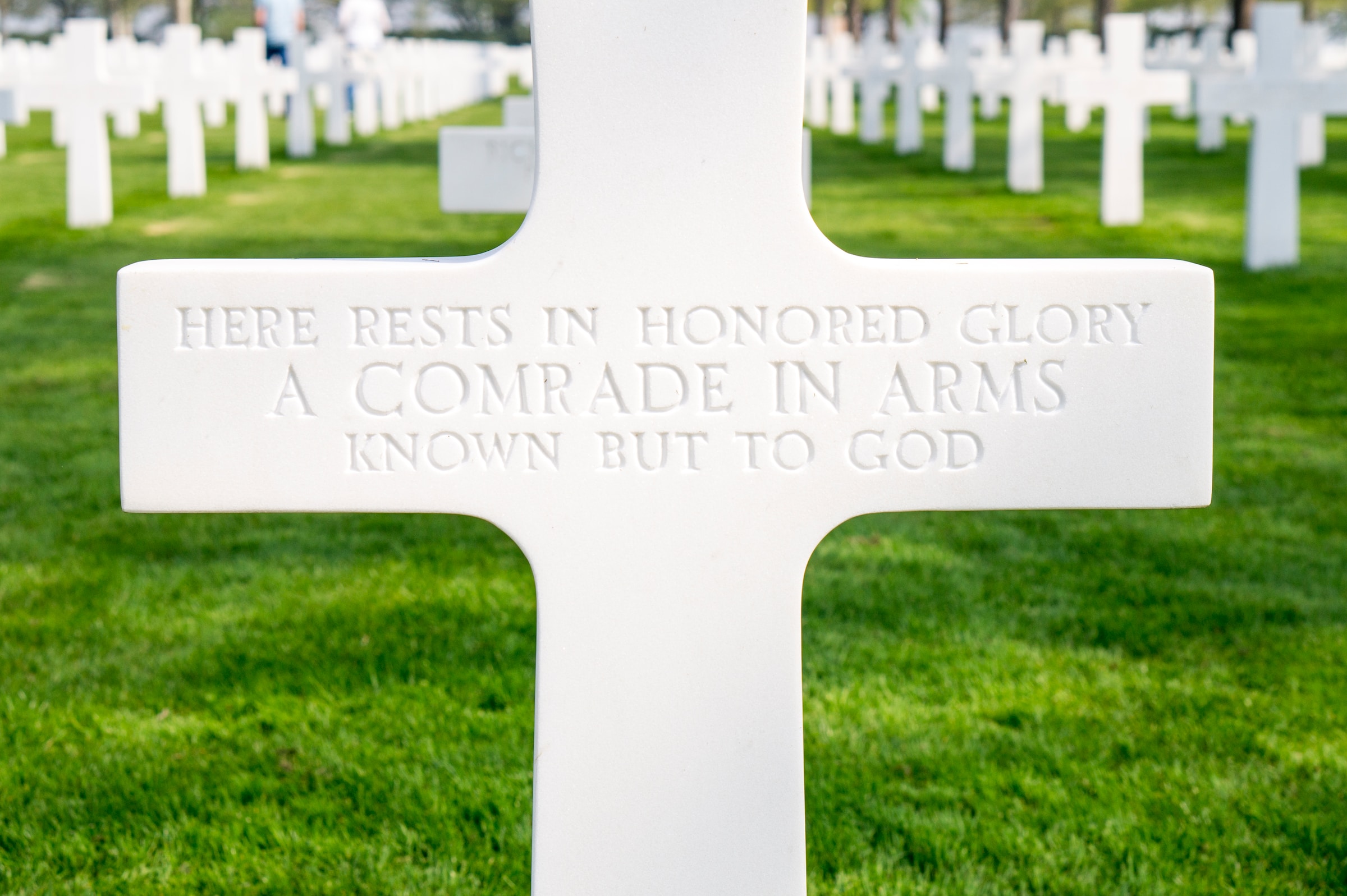
“In Flanders Fields” does have a strong focus on death and human mortality, but those somber scenes are strategically offset with peaceful images of nature, love and life. The contrasting imagery is what creates the tension in this piece. The peacefulness of the first line lures the reader into a false sense of security: “In Flanders fields the poppies blow.” It quickly invokes striking imagery of a field of red poppies peacefully blowing in the wind. The reader would do well to dwell on this beautiful scene for a time, but the line does not pause there. Devoid of a comma or period, the enjambment urges the reader on, “In Flanders fields the poppies blow/ Between the crosses, row on row/ That mark our place;”. Ah! Now the reader sees the full picture! Poppies may grace this place, but they grow among a graveyard filled with rows and rows of graves marked by crosses. Thus, the tension is felt from the very beginning with the juxtaposing of the peaceful and sublime imagery of nature with the gloomier images of war. This feeling of tension is further demonstrated with imagery of songbirds flying in the sky, contrasted by the guns of war on the ground below them and tension is found in these words: “…We lived, felt dawn, saw sunset glow/ Loved and were loved.” The flowery words are a lovely reminder of the very human lives that these soldiers lived but this too is juxtaposed with the contrasting somber reminder: “…and now we lie, / In Flanders fields.” The tension is a tug-of-war that is played with the reader’s emotions, quickly alternating between the hope and rebirth of nature, life and love to the alternate view of the horrors and devastation of war.
The reader doesn’t have to guess who the speaker is because it is communicated clearly in the first two stanzas of the poem. The crosses “that mark our place” make it clear that this is not just one speaker, but many and the speakers are the dead. As if the reader might be in doubt, the speakers make it pointedly clear, “We are the Dead.” However, these voices from the dust don’t want the living to think of them only as inanimate corpses: “Short days ago/ We lived, felt dawn, saw sunset glow, / Loved and were loved.” The words make it sadly apparent to the reader that these graves are only a few days old and the soldiers met their untimely deaths too soon. Perhaps this is why their spirits are restless. Their desperation is a gloomy reminder that these were human beings that lived very real human lives and that those lives were cut short prematurely. McCrae stays true to the established form of contrasting the beautiful imagery with another stark reminder: “…and now we lie, / In Flanders fields.” The unhappy refrain added to the lovely imagery of the soldier’s lives, loves, and observations of nature pulls at the reader’s heart-strings and solicits sympathetic feelings. One cannot help but feel the desperate desire of these brave soldiers to be remembered, not just for their bravery and sacrifice of life, but for the lives that they once lived.

Reading the poem aloud, one might notice the subtle uses of sound to further enhance the feeling of being in a graveyard and hearing the dead speak from the grave. The skillful use of alliteration and assonance gives an eerie feeling of being personally present, graveside, and witnessing the overall melancholy of the setting. The repeated soft consonant sounds in the phrases, “saw sunset” and “hold it high” produce a rhythmic motion of words that seem to imitate the breathy whispered sounds of many murmuring voices speaking softly together from the grave. The alliteration of the words “loved,” “love,” and “lie” stresses the importance of love in the soldier’s lives but rushes into “lie” to emphasize the abrupt ending of that love through the early and tragic end of their lives caused by the war. The assonance of the “aw” sound in “dawn” and “saw” is a gentle reminder of the humanity of the speakers, while the alliteration of the consonant sound of “Flanders Fields” emphasize the importance of the place. “In Flanders Fields” is the refrain of this 15-line rondeau, so it is repeated 3 times, once in each stanza, further underscoring the significance of the somber location. How lonely this place must be for these soldiers, buried in foreign lands far from home. The focus here is very much about the lives of these soldiers, the tragic loss of life, and their voices speaking from the grave with a desire to impart wisdom and ensure that their sacrifice will not be overlooked.
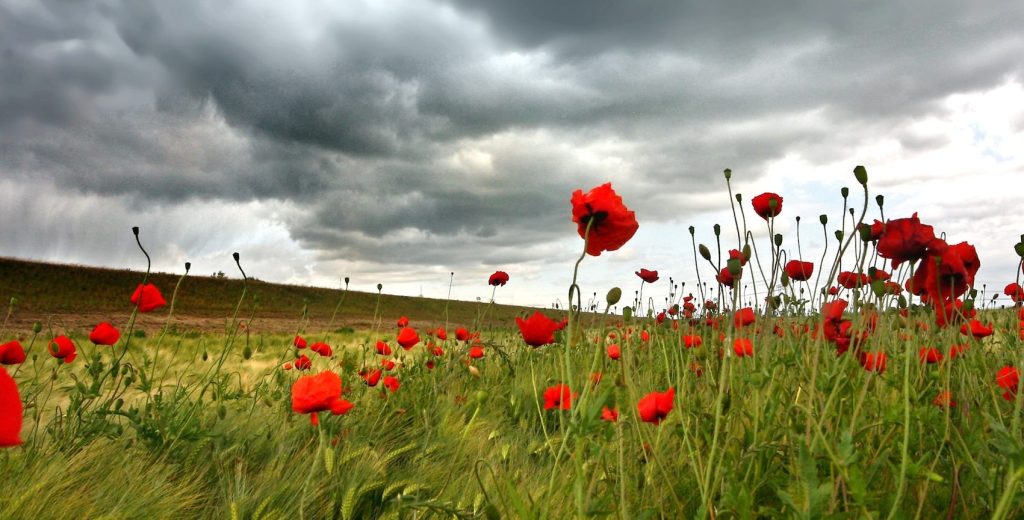
How lonely this place must be for these soldiers,
buried in foreign lands far from home.
Pondering the choice of words in the poem can be endless fodder for long discussions about meaning. Some word choices are obvious, Flanders Fields are areas of North-East France and Belgium where many soldiers died and were buried during the First World War. The poppy is the red-flowered corn poppy and a common plant of disturbed ground found in many fields, including Flanders (Poppy). Other diction choices are very interesting to study. The lark is a ground-dwelling bird that delivers song while in flight, but the word “lark” also suggests something that is foolish or a waste of time (Lark). Is this a hint that the soldiers recognize that this war is, perhaps, a foolish endeavor? Another hint is the use of the word “quarrel” in the line, “Take up our quarrel with the foe.” A quarrel is an impassioned squabble or disagreement, usually about a trivial issue between two people who are usually on good terms (Quarrel). The use of this word instead of words like “fight” or “battle” seems to suggest that the war is merely a disagreement about a trivial issue, and is therefore not as important as the instigators of the war might’ve originally thought. There is the interesting use of the word “failing” in the line, “To you from failing hands we throw.” “Failing” is defined as a usually slight or insignificant defect in character, conduct or ability; a weakness (Failing). The soldiers recognize their own shortcomings and weakness of character. Conceivably, this weakness of character may be the faith they put in the world leaders who started this war in this first place, or perhaps it is merely that they failed to endure in battle. Did they begin the fight with noble intentions, then lose faith in what they thought they were fighting for?

Symbolism plays a big part in this piece. It’s almost astonishing at how much symbolism is contained in just 15 lines of verse. The red poppies symbolize sleep, peace and death. Sleep because of the sleep-inducing opium extracted from them, death because of the common blood-red color of the flower, and peace because the poppies grow in the final resting place of the dead (Poppy). Obviously, the crosses symbolize a cemetery and “row on row” means a cemetery with lots of bodies. As discussed above, the lark can symbolize a foolish endeavor or a waste of time.
The most striking and meaningful symbol worth much discussion is the torch, as mentioned in these lines: “To you from failing hands we throw/The torch; be yours to hold it high.” This part of the poem could easily be misinterpreted to mean that the dead want the living to take up their torch of battle and continue the fight for them, suggesting a glorification or romanticizing of war. A torch is a transportable form of illumination, such as a piece of wood or cloth soaked in tallow or an oil lamp on a pole and it is sometimes carried ceremoniously (Torch). Therefore, this is strong evidence that the soldiers mean for the torch to be taken up and ceremoniously carried by the living. One might remember the idiom, “carrying the torch” that is used from time to time. To say that someone is “carrying the torch” of a particular belief or movement means that they are working hard to ensure that their cause is not forgotten. It is then understood that the living are to carry the torch for the thousands who died to make sure that their sacrifice and bravery in battle are not consigned to oblivion (Carry). Finally, the soldiers make one last entreaty, “If ye break faith with us who die/ We shall not sleep.” If one were to “break faith” with someone, it would mean that they stopped supporting or being loyal to that person. It’s a betrayal of trust (Break). The soldiers are desperate to be remembered. They are trusting the living to not ever forget their sacrifice, and if the living keep the faith and remember, only then can the soldiers rest in peace.

carry the torch
(Phrase)
If you say that someone is carrying the torch of a particular belief or movement, you mean that they are working hard to ensure that it is not forgotten and continues to grow stronger.
Example: This group aims to carry the torch for the thousands who died.
Example: Since his death his daughter has carried the torch of his legacy.
~ Collins English Dictionary
In summary, the tension at the beginning of the composition is a clear demonstration that McCrae chose to lessen the horrific images of war with softer more peaceful images of love, life, and nature. If the intention was to glorify war, then no attempt would’ve been made to minimize the impact of the warlike images. The skillful way that assonance and alliteration were used to simulate wistful whisperings from the grave are gentler representations of voices of the dead entreating the living for remembrance. This too is a deliberate choice. The diction of the word choices such as “quarrel” rather than harder words such as “fight” or “battle” and the soldier’s recognition of their “failing hands” demonstrates remorse, sadness and loss of faith, rather than fierce determination of warlike behavior. The symbolism, such as the touching red poppy that represents sleep, peace and death are strongly indicative of the injustice of war and the sad loss of life that comes from it. Most importantly, the torch is evidence of the soldier’s entreaty that a symbolic “Eternal Flame” be lit as a remembrance of their sacrifice. It is the final capstone for the argument that “In Flanders Fields” is a Memoriam to the brave souls who loved and lost on the battlefields of life, as well as the real battlefields of war, and it is far from being an ode to war. Fittingly, the poem ends with the same beautiful imagery with which it began, “…though poppies grow/ in Flanders fields.” It’s as if the lovely but lonely scene pierces the soul and etches itself on the heart and mind of the reader. One cannot easily forget the striking image of delicate blood-red poppies blowing in the wind among the rows and rows of silent graves marked by white crosses. It inspires the witnesses, the visitors who have heard the whispers of the voices from the grave, to softly utter a vow of their own, “We shall take the torch and hold it high. We will never forget.”
Works Cited
“Break faith with.” Merriam-Webster.com Dictionary, Merriam-Webster, https://www.merriam-webster.com/dictionary/break%20faith%20with. Accessed 29 Jan. 2021.
“Carry the torch.” Collinsdictionary.com, Harper Collins Publishers, https://www.collinsdictionary.com/us/dictionary/english/carry-the-torch. Accessed 23 Jan. 2021.
“Eternal flame.” Wikipedia, The Free Encyclopedia. Wikipedia, The Free Encyclopedia, 19 Jan. 2021. Web. 23 Jan. 2021.
“Failing.” Merriam-Webster.com Dictionary, Merriam-Webster, https://www.merriam-webster.com/dictionary/failing. Accessed 23 Jan. 2021.
“Lark.” Merriam-Webster.com Dictionary, Merriam-Webster, https://www.merriam-webster.com/dictionary/lark. Accessed 23 Jan. 2021.
McCrae, John. “In Flanders Fields.” PoetryFoundation.org, Poetry Foundation, http://www.poetryfoundation.org/poems/47380/in-flanders-fields. Web. 23 Jan. 2021.
“Poppy.” Wikipedia, The Free Encyclopedia. Wikipedia, The Free Encyclopedia, 28 Dec. 2020. Web. 23 Jan. 2021.
“Torch.” Wikipedia, The Free Encyclopedia. Wikipedia, The Free Encyclopedia, 16 Jan. 2021. Web. 23 Jan. 2021.
“Quarrel.” Oed.com, Oxford English Dictionary, Oxford University Press, https://www.google.com/search?q=define+quarrel&rlz=1C5CHFA_enUS766US767&oq=define+quarrel&aqs=chrome.0.69i59.3210j0j7&sourceid=chrome&ie=UTF-8. Accessed 23 Jan 2021.
What do you think? Was John McCrae’s poem meant to glorify war or was it meant to evoke the sadness and loss of war? (You can read it here: https://www.poetryfoundation.org/poems/47380/in-flanders-fields). Remember to be kind and thoughtful in your reply!
Citing this essay:
Hathaway, Lynne J. “A Plea From the Grave.” Selected Critical Essay : In Flanders Fields by John McCrae, 9 Aug. 2022, https://wordpress.com/page/modern-inklings.com/55.
What do you think? Ater reading this essay, do you agree that John McCrae meant to point out “the injustice of war and the tragic loss of life that is a byproduct of war” or is his poem meant to glorify war? What evidence can you present to back up your point-of-view? (You can read the poem here: https://www.poetryfoundation.org/poems/47380/in-flanders-fields). Please be kind and respectful in your replies!
Lynne is an essayist and wordsmith with substantial knowledge of literature, literary criticism, proofreading and editing. She has a BA in Professional Studies with a minor in English and also has experience in Graphic Design.
Modern_Inklings@icloud.com
 Modern Inklings
Leave a comment